
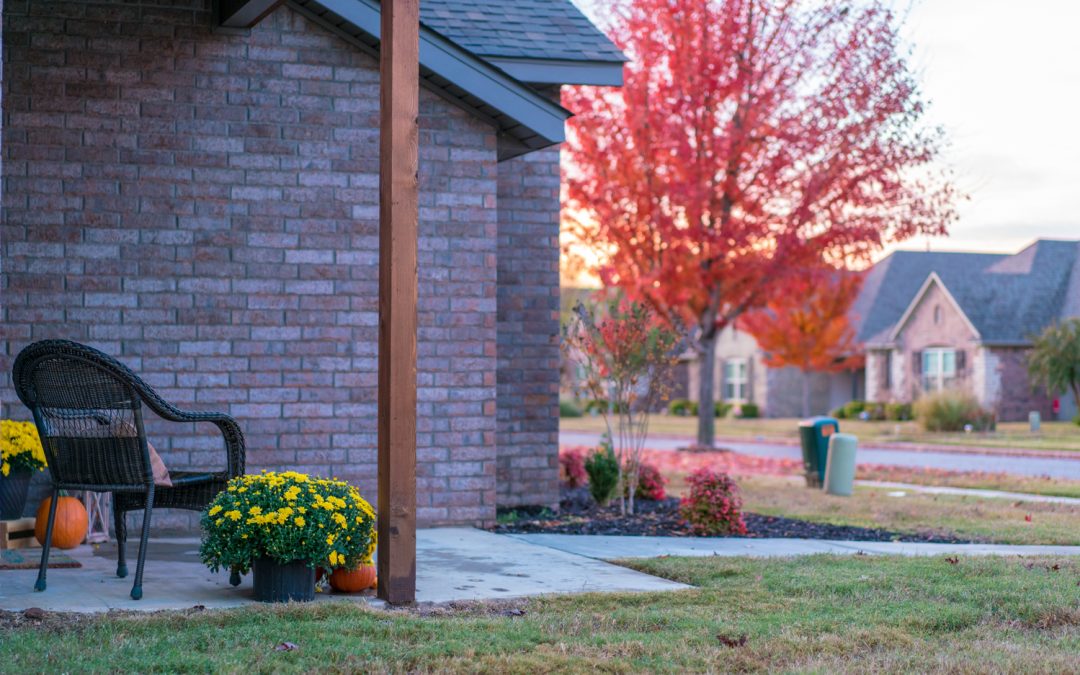
That is the fall pest story across Southwest and Southeast Missouri. Four insects account for most of it: brown marmorated stink bugs, Asian lady beetles, boxelder bugs, and cluster flies. None of them are dangerous. All of them are a nuisance in numbers, and all of them are looking for the same thing your home offers. Here is how to tell them apart and how to keep them out.
Why These Bugs Suddenly Show Up Indoors in Fall
They are overwintering. As Missouri nights drop into the 40s and 50s, these insects look for a warm place to wait out winter, and they gather first on the south and west-facing walls that hold the afternoon sun. From there, they slip inside through the gaps every house has: window frames, worn door sweeps, cracks in siding, and where pipes enter the wall.
Brown Marmorated Stink Bugs
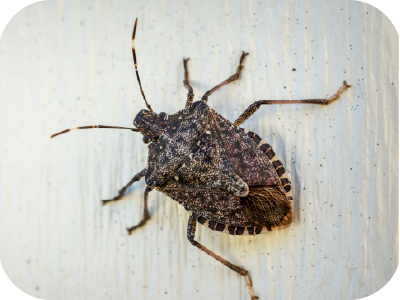
How to spot one: About the size of a dime, shield-shaped, mottled brown with faint white bands on the antennae. If you crush one, you will know it instantly by the smell.
Why it is here now: Stink bugs are one of the most persistent fall invaders in Missouri. They mass on warm exterior walls in large numbers and push inside through the smallest gaps.
What to do: Do not crush them. The odor is the whole point of their defense, and squashing one on a wall or carpet leaves a stain and a smell that lingers. Vacuum them up instead, then empty the canister or bag outside right away so the smell does not settle into the vacuum. Better yet, keep them out in the first place with sealing and exterior treatment.
Asian Lady Beetles (Not Your Garden Ladybug)
This is the one people get wrong, so it is worth a close look.
Asian lady beetle vs ladybug: Native ladybugs are the harmless garden insect most people picture, deep red with a few black spots, and they stay outdoors. Asian lady beetles are the ones that invade homes by the hundreds. They range from orange to red, carry a variable number of spots, and the giveaway is a small black marking shaped like an M or a W on the white area right behind the head. If it is indoors in a crowd and it has that M, it is an Asian lady beetle.
Why it is here now: They swarm sunny walls in fall and work their way into wall voids and attics to overwinter, often reappearing inside on warm winter days.
What to do: Like stink bugs, do not crush them. Disturbed Asian lady beetles release a yellow fluid that stains walls and fabric and carries its own odor. Vacuum them up and empty it outside. They can also give a small pinch if handled, so the vacuum is the friendlier tool for everyone.

Boxelder Bugs
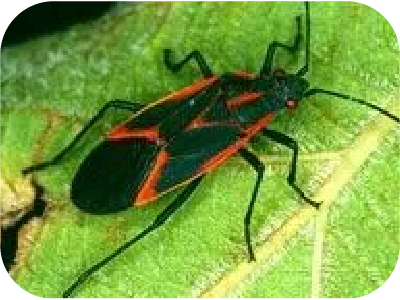
How to spot one: Black with three bright red-orange lines on the back and red edging on the wings, about half an inch long. Young ones are almost entirely bright red.
Why it is here now: Boxelder bugs congregate on warm south and west walls in the same fall crowds as stink bugs and lady beetles, then work inward to overwinter. They are harmless. They do not bite, sting, or damage your home. In numbers, they are simply a lot of bugs where you do not want them.
What to do: Vacuum rather than crush, since boxelder bugs can leave a reddish stain on light surfaces. The lasting fix is exclusion, closing the entry points before the crowd arrives.
Cluster Flies
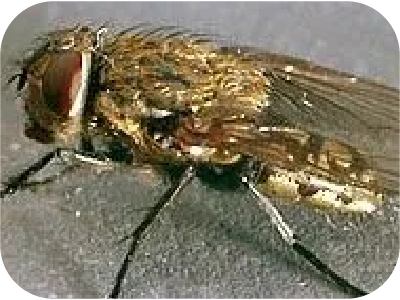
How to spot one: A bit larger and darker than a common house fly, slow and sluggish, with a faint golden sheen on the body. The name fits their habit. You find them clustered together, often at windows or in quiet corners of an attic or spare room.
Why it is here now: Cluster flies overwinter in the upper reaches of a house, attics, wall voids, and around window frames. On warm days, they drift down toward the light and gather at windows, which is usually when people notice them.
What to do: Vacuum the ones you find. Because they settle in attics and wall voids, the real answer is sealing the upper entry points, around the roofline, vents, and window frames, so they cannot get in to begin with.
How to Keep Fall Invaders Out of Your Missouri Home
Every one of these pests uses the same doors. Close the doors, and you close out all four.
- Seal the gaps. Caulk cracks around windows, doors, siding, and the spots where utility lines and pipes enter the wall. Add or replace weatherstripping and door sweeps. This is the single most effective step, and it works before the first hard freeze.
- Check your screens and vents. Repair torn window screens and make sure attic, soffit, and foundation vents are screened. These are the entry points people forget, and they are exactly how stink bugs and cluster flies get into upper floors.
- Vacuum, do not smash. For every one of these insects, crushing means stains, odor, or both. A vacuum is faster and cleaner. Empty it outside afterward.
- Treat the perimeter. Sealing helps, but no house is perfectly tight. An exterior treatment applied to the walls and entry points before pest season reduces how many ever reach a gap in the first place.
Timing matters more than anything. Once these insects are settled in your walls, options narrow, and crushing overwintering pests indoors only creates the mess you were trying to avoid. The work that pays off is done in early fall, on the outside of the house, before the crowds gather.
When to Call Bug Zero
If the crowds on your walls are already large, or if they are turning up inside faster than you can vacuum, that is the sign to bring in a professional. Bug Zero serves homes across Southwest and Southeast Missouri, and fall invaders are exactly what our InsectaShield® program is built for. It treats the exterior perimeter and the entry points these pests use on a recurring schedule, so your home is protected before the temperature drops. InsectaShield® starts at less than $120 per service and covers general pests year-round, not just in fall.
Why are there so many bugs on the side of my house in fall?
How do I tell an Asian lady beetle from a ladybug?
Should I kill stink bugs and lady beetles I find inside?
Are boxelder bugs and cluster flies dangerous?
Does Bug Zero treat fall pests in Springfield and Cape Girardeau?
Keep Fall Invaders Out Before They Settle In
These pests will not leave on their own once they are in your walls, and fall is the short window when sealing and treatment do the most good. Whether you are seeing them on the siding or already inside, Bug Zero can help across Southwest and Southeast Missouri.
Springfield Area: (417) 831-7378
Cape Girardeau Area: (573) 803-7828